

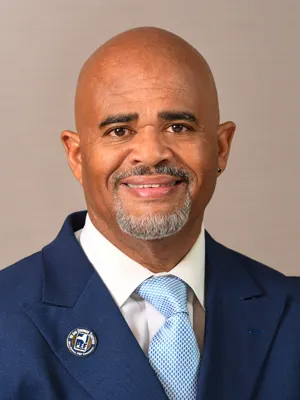
 May 7, 2026 — Editor’s note: PEF is an affiliate of the American Federation of Teachers (AFT) and this article originally appeared in the AFT Voices blog.
I am a proud graduate of the New York State Division of Parole Training Academy, having served as a parole officer for the state since 1993. My academy classmates and I attended 10 weeks of rigorous training. We learned the basics of parole supervision, the proper use of force, various techniques for de-escalating tense situations, and, most importantly, how to handle firearms safely.
I embraced the training so much that I went on to get certified as a police firearms instructor and an evaluator of other instructors. It’s a role I can still perform to this day, even as I serve my 12th year as president of the New York State Public Employees Federation, a labor union affiliated with the AFT that represents 60,000 professional, scientific and technical employees.
There is one excellent reason why parole officers in New York State train so much — it saves lives. The consequences of not following the right protocols can lead to injury or even death. Parole officers work every day with people who have histories of violent crimes, and you must be committed to helping them rehabilitate their lives. A comprehensive training program is critical for anyone working in law enforcement.
ICE ain’t all that
Compare that to the “training” received by the 12,000 recruits who have joined U.S. Immigration and Customs Enforcement during the second Trump administration. For one thing, there’s this information from Ryan Schwank, a former ICE lawyer who worked at the federal law enforcement training academy: According to Schwank in the New York Times, the number of practical exams ICE agents must complete has been reduced from 25 to nine. Yes, nine.

Some of the exams that were eliminated? “Judgment Pistol Shooting” and “Determine Removability,” a reference to how an agent decides if the people they encounter have legal status in the United States.
It is no great leap of logic to conclude that lack of judgment regarding when to use a pistol led directly to this year’s killings of Renee Good and Alex Pretti in Minneapolis.
In addition, a recent report from the New York Times revealed that, despite receiving $750 million in additional funding for training, ICE has cut almost 40 percent of its training to “save time.” A July 2025 ICE training syllabus shows that recruits received more than 580 hours of training over 72 days. A syllabus from last month reveals just 336 hours over 42 days. That amounts to a 40 percent decrease in training.
Understand this: Time saved does not save lives.
What saves lives are well-trained professionals who know how to react in every situation because they’ve been drilled by instructors and thoroughly trained to do their dangerous jobs in any scenario they may encounter.
New York State parole officers work every day to keep the parolees they oversee on the road to recovery, so that they can once again become productive members of society. Is it too much to ask that ICE agents receive adequate training so that they, too, can do their jobs without harming people and disrupting communities?