

May 7, 2026 — For National Nurses Month in May, we spoke to several of the nurses on the PEF Statewide Nurses Committee (SWNC) about why they entered the profession and why they stepped up to represent and advocate for their fellow nurses as union leaders. Here’s what they had to say!
Vincent Cicatello, Buffalo Psychiatric Center
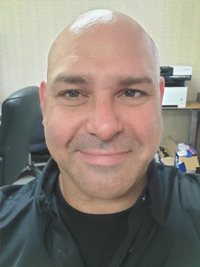 Statewide Nurses Committee (SWNC) Chair Vincent Cicatello went into nursing in Buffalo after the birth of his first child, Vincent Cicatello Jr., who was diagnosed with a severe illness called Severe Combined Immunodeficiency Syndrome (SCIDS).
“My son was very sick, and it took months after he was born before he was diagnosed,” Cicatello said. “I was influenced by the nurses at Buffalo Children’s Hospital, Duke University and eventually Memorial Sloan Kettering, as all his nurses were top-notch clinicians who always put our entire family at ease during several very difficult times.
“Regardless of if Vincent Jr. was getting a bone marrow transplant (four times), getting IVIG infusions, or going for general follow up and lab work, we felt the nurses were extremely supportive,” he said. “My son just loved all the nurses for their kindness and for the excellent care they provided him. The nurses have kept him alive and have made his life better for almost 30 years now.”
Serving on the SWNC Is an honor, he said.
“When I was asked if I was interested in joining the SWNC by President Spence, I was very proud to be recognized as someone who could contribute to both the nursing profession and also to be in a position to serve and to advocate for the almost 10,000 statewide nurses including many nurses in the Region 1/Western New York area,” Cicatello said. “Collaborating with Debbie Egel, Nora Higgins,SWNC Chair Amy Pacholk and the committee has been one of the highlights of my PEF membership.”
The SWNC focuses on improving the work/life balance of PEF nurses and looks at various issues, including health and safety in the workplace, scheduling concerns, and the wellbeing of nurses.
“Many nurses, whom we may not even know, will reach out and share their concerns and often seek advice from various committee members,” he said. “One of the most important functions of the SWNC is the annual Nurses Lobby Day in Albany. Attending lobby day allows us to discuss the concerns of nurses and healthcare workers of the Public Employees Federation with state senators and assembly members. We encourage and work with legislators to help push our agenda, which can improve worksites for both PEF nurses as well as the several agencies we represent.”
Amy Pacholk, SUNY Stony Brook
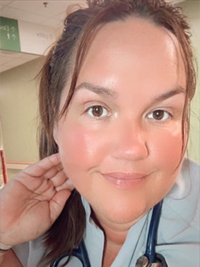 It was a winding path to nursing for SWNC Chair Amy Pacholk.
“As Bob Ross would say, ‘It was a happy little accident,’” she said. “My background was in political science and international development. I was always interested in advocating for health and education. I have always thought: If you do not have your health, you do not have anything; and knowledge is power.”
Pacholk spent time working in Europe and Africa but was increasingly drawn to health-related socioeconomic dynamics and their implications, she said. Her original intent was to return stateside to get a Master’s in Public Health – but Hurricane Katrina had other plans, shutting down New Orleans where she planned to study.
“I decided to take science classes at Suffolk County Community College to enhance my understanding of the building blocks of health until I finally went to New Orleans to study,” she said. “I was surrounded by people at Suffolk who were pursuing degrees in medicine, nursing, physical therapy and occupational therapy. I always believed in advocacy and helping people, and with the strong encouragement of a few classmates, I applied to Stony Brook University’s one-year intensive RN program.”
She was accepted and the rest, as they say, is history.
“I have spent my time working as a surgical, trauma, and neurosurgical ICU nurse ever since,” she said. Since entering the profession, Pacholk has gone on to become a Master’s prepared nurse, practiced independently, lectured on neuro trauma, and taught nursing at several universities and colleges.
During the COVID pandemic, Pacholk become a national advocate for personal protective equipment (PPE) and exposed the national shortage on MSNBC’s 11th Hour with Brian Williams. She went on to work with new agencies across the world to discuss bedside dynamics and caring for COVID patients.
President Spence asked her to join the SWNC to continue her advocacy.
“I think that the nurses who work for NYS deal with significant challenges that are unique to public employees,” she said. “Often when people think of a nurse, they think of someone like me who works in a hospital. What is unique and special about the nurses we represent in PEF is that we take care of every population in just about every situation: in hospitals, jails, psychiatric hospitals, veterans’ facilities, nursing homes, children’s homes, facilities for the disabled, substance abuse facilities, and more. Nursing is a dynamic profession and we experience and advocate for all of the intricacies of it and the people we serve and care for on the SWNC.”
Jeffrey Taylor, Clinton Correctional Facility
SWNC member Jeffrey Taylor, from Region 7, credits family for leading him to a career in nursing.
“I entered the nursing profession through the encouragement of my wife, my aunt, and my uncle,” he said. “I was working construction when I lost my job due to an economic downturn. My aunt and uncle were in the medical profession as nurse anesthetists. My wife was an operating room nurse, and I helped her study when we were dating.”
Having recently purchased a home and with a baby on the way, instability in the construction industry spurred him into action – and into nursing.
“I am so grateful for the opportunities that have now been available to my family and I with this decision,” Taylor said.
He decided to join the SWNC to advocate for his colleagues.
“I have always tried to communicate issues within our profession to help with the ever-changing needs within our ever-changing environment and challenges,” he said. “I am very grateful to work alongside such as exceptional group of nurses.”
Dorothy Faulkner, Corrections Central Office
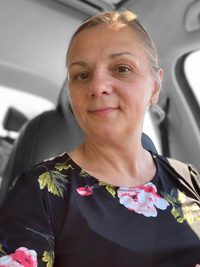 Working as a secretary on a pulmonary unit, Dorothy Faulkner from Region 8 saw the care and compassion of the nurses around her and was inspired to enter the nursing profession to do the same.
“I observed how the nurses not only took care of the patients but the families also,” she said. “I watched as a family sat bedside with a family member declining but kept a comfortable distance, and the nurse walked in and said, ‘You can move closer, hold his hand, talk to him, he can hear you.’ I was in such awe that she knew to do that and the comfort it brought to the family.”
Faulkner wanted to help people as far back as she can remember.
“The role of caretaker has always been something that brought me joy from a very young age,” she said. “I observed sickly patients come in to be taken care of and independently walk out upon discharge feeling better. I wanted to learn the best way to do that.”
Joining the SWNC, Faulkner can now lift up and support not just patients, but fellow nurses.
“Nurses work so hard caring for everyone and sometimes don’t have a voice to speak for themselves,” she said. “I didn’t know how unions could assist or the opportunities they have to assist in situations where nurses aren’t being treated fairly. I wanted to educate myself and help.”
Cynthia Walker, SUNY Downstate
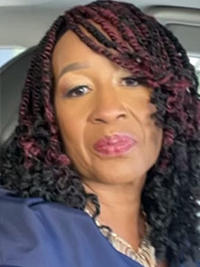 In Region 11, Cynthia Walker credits nurses caring for her mother, a cancer survivor, at Buffalo General Medical Center for her entrance into the profession.
“The care my mother received by the nurses was phenomenal and inspired me to become a registered nurse,” she said.
Walker spent several years working in a medical-surgical unit on Long Island, before she was hired in her own community at SUNY Downstate in the cardiac/telemetry/stepdown unit.
“I was impressed by the dedication and determination of my coworkers in the way they cared for patients and the fast-paced, high acuity atmosphere,” she said. “Many of the employees had families and were continuing their education, inspiring me to go back to school for my bachelor’s degree.”
Walker recognized the power of the union to effect change for nurses and was soon involved on multiple levels, as chair of the Clinical Staffing Committee (required by NYS law) at SUNY Downstate and as a member of the PEF Contract Team.
“Being involved in the union gives me a voice to advocate for the conditions that state employees are experiencing in the institutions,” she said. “By addressing these concerns, our approach is to enhance the health care setting with better working conditions and comparative salaries in an effort to attract new graduate RNs.”
She was an active participant in the fight to save SUNY Downstate and is a member of the Clinical Leadership Team for the “Re-Imagine” SUNY Downstate restructuring and renovations. Walker is also newly elected as Council Leader at Downstate.
“Along with a robust Division Council, we are driving the importance of member engagement, advocating for better healthcare outcomes, work-life balance, and we are united for a contract state workers deserve,” she said.