

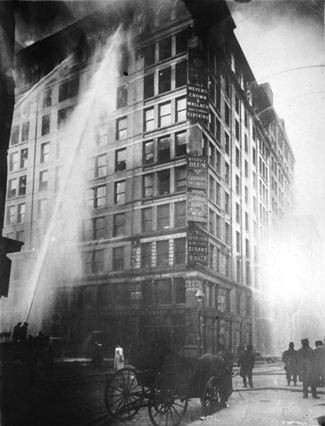
March 13, 2026 — New York City. 1911. A devastating fire at the Triangle Shirtwaist factory on the top floors of the Asch Building in Manhattan claimed the lives of 146 workers and forever changed how we look at worker safety.
In the early 20th century, working conditions in factories across the country were often unsafe, unsanitary, and poorly regulated.
The shirtwaist factory was no different – with long hours in crowded rooms, few breaks and low pay. Supervisors reportedly locked doors to prevent unauthorized breaks and reduce theft.
On Saturday, March 25, as workers wrapped their shift, a fire broke out, believed to have been caused by a discarded cigarette or match igniting a fabric scrap bin, which quickly spread across a floor littered with flammable materials.
With locked doors, a rickety fire escape that buckled quickly under the weight of fleeing workers, and elevators that stopped functioning, 146 people perished by either burning or jumping to their deaths.
Many who died were women and teenagers, some as young as 14.
The tragedy spurred a massive shift in how the United States saw worker safety.
“In response to the tragedy, New York state created the Factory Investigating Commission … led by progressive lawmakers like state Sen. Robert Wagner and Assemblyman Alfred E. Smith, conducted hearings, visited factories and gathered testimony from workers. They discovered that unsafe machinery, overcrowding, poor ventilation and inadequate emergency exits were commonplace,” according to the OSHA (Occupational Safety and Health Administration) Education Center website.
OSHA, established in 1970, is a direct result of the Triangle Shirtwaist Factory tragedy, as were more than 30 new labor laws passed in New York between 1911 and 1914, including:
- Mandatory fire drills and sprinkler systems in factories
- Improved fireproofing and building construction standards
- Laws limiting the hours and conditions under which women and children could work
- A requirement to have unlocked exits and accessible fire escapes
- Regular safety inspections and enforcement mechanisms
Labor unions took up the clarion call for robust health and safety regulations in the workplace, and the International Ladies Garment Worker Union grew in the aftermath of the fire, establishing collective bargaining rights for garment workers across the United State.
In 2002, the Triangle Shirtwaist Factory Fire Memorial Scholarship Fund was established in memory of the fallen workers, presented to children whose parents were killed or permanently disabled on the job. The award is $6,000 annually for the length of studies and is offered to multiple scholars each year.
 PEF Health and Safety
Unions continue to honor the legacy of those lost on the job through health and safety departments and contract provisions.
PEF’s Health and Safety Department employs dedicated specialists and provides comprehensive programs, information, and technical assistance in a variety of ways, including:
- On-site training, workshops and conferences on the topics that affect members the most, such as violence in the workplace, ergonomics, workplace stress, indoor air quality, worker’s compensation, chemical hazards and much more.
- Formation and support of workplace and agency joint health and safety committees.
- Technical assistance such as worksite inspections and policy review; workers’ compensation assistance; PESH enforcement; fact sheets; information on standards & regulations; and “Right to Know” information.
Article 18 of the PS&T contract focuses on health and safety, as well, creating a joint PEF/NYS Article 18 Committee to study and review matters of mutual concern in areas of health and safety, serving as a forum in which PEF can advise the state of potential health or safety problems; advise on the development and implementation of state policy in all matters related to health and safety; serve as a means by which pro-active measures to improve health and safety at the worksite can be developed and implemented; and undertake initiatives in research, education and support of agency and local level health and safety committees. The committee is co-chaired by Region 3 Coordinator Leisa Abraham and Region 9 Coordinator Gabriela Franklyn.
There are also agency-level and local-level committees, tasked with the same functions as the state-level committee. PEF’s Health and Safety Department works with local leaders to establish these crucial committees and encourages workplaces without a local level committee to reach out about forming one.
For more information, contact Health and Safety at 1-800-342-4306, ext. 254, or healthandsafety@pef.org.