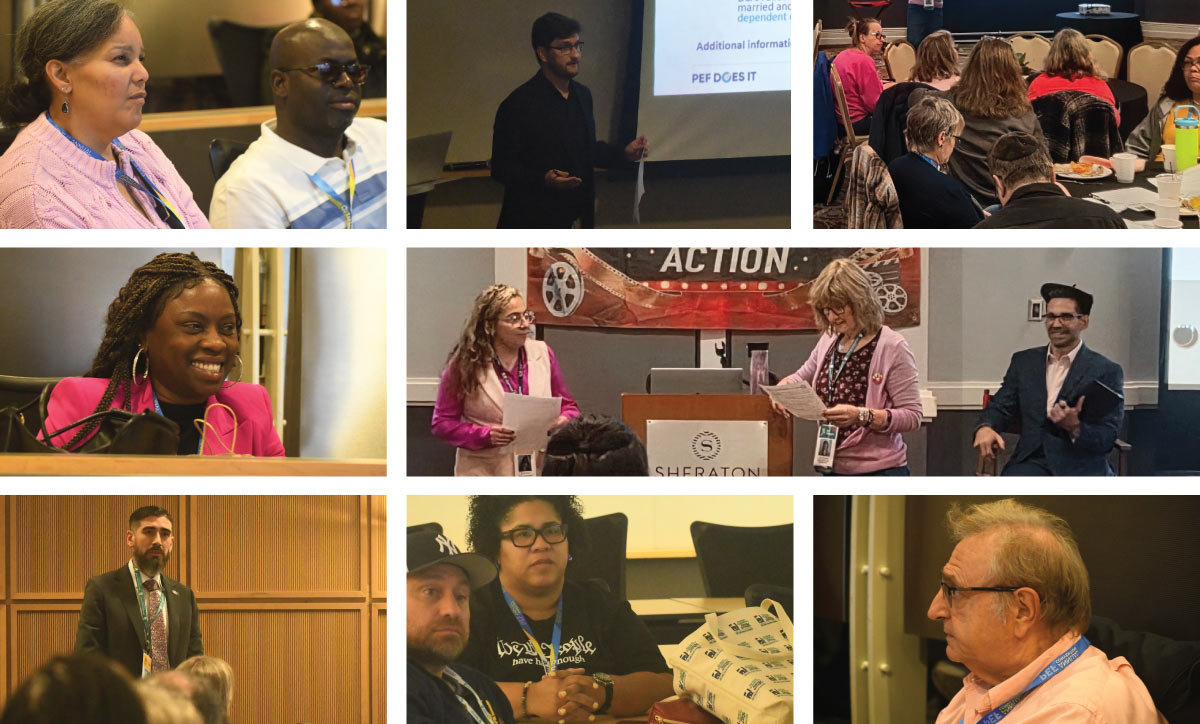
October 30, 2026 — PEF Convention delegates had the option of two workshops to attend after the main plenary session on Oct. 20.
Not Part of the Job: What to Do After a Workplace Assault, was led by staff from the PEF Health and Safety department. Assaults and other unsafe working conditions have increased over the years across state agencies and throughout state-run facilities.
The workshop provided members with a thorough, step-by-step guide on what to do when a member is assaulted, which starts with seeking medical care, reporting the assault to the union, and reserving the right to pursue criminal charges. The workshop also stressed, however, that telling the union is not enough. Incident reports, workplace violence incident reports, and a report to the NYS Accident Reporting System are all essential to ensuring proper documenting, accountability and safety.
The workshop did not stop at what to do for personal safety but also looked at how union leaders can make changes at the workplace to prevent further incidents.
PEF Health and Safety advised that leaders should ensure that they provide calm guidance and no pressure on decisions, but also protect the record by requesting video preservation, taking photos of injuries, and saving any relevant texts or emails.
Using Your Contract: Overlooked Benefits in the NYS-PEF Agreement provided members with a detailed look at several contract benefits available to members — from the Productivity Enhancement Program (PEP) to Educational Reimbursements and Professional Development and even Parking Benefits.
Staff with PEF Contract Administration reminded members they can be reimbursed for up to $5,000 per year in college tuition for qualifying courses taken at accredited colleges or universities, as well as reimbursements for certification and licensure examinations. Additionally, PEF members are eligible for workshop and seminar reimbursements for qualifying professional development conferences, workshops, seminars and non-college credit courses. Nurses can receive an additional $1,600 per calendar year.
Flex Spending Accounts (FSA) are often overlooked by members as well. They are funded via paycheck deduction using pre-tax dollars and allow members to pay for certain expenses, including up to $7,500 per household for childcare or elder care through the Dependent Care Advantage Account (DCAA). Other accounts include the Adoption Advantage Account (AAA), which allocates up to $17,670 for adoption related expenses, and the Health Care Spending Account (HCSA) which sets aside any amount from $100 to $3,400 to pay for any health care expenses not reimbursed by health insurance.
Enrollment for the various FSA programs begins on November 2 and runs through December 7. The programs are administered by the NYS Office of Employee Relations. Sign up forms will be available on the OER website. PEF will publicize the open enrollment period on its own website, social media channels, and the app.
Members interested in more information regarding either workshop topic may reach out to PEF Health & Safety at Healthand.Safety@pef.org or PEF Contract Administrator Dylan.Hatch@pef.org.